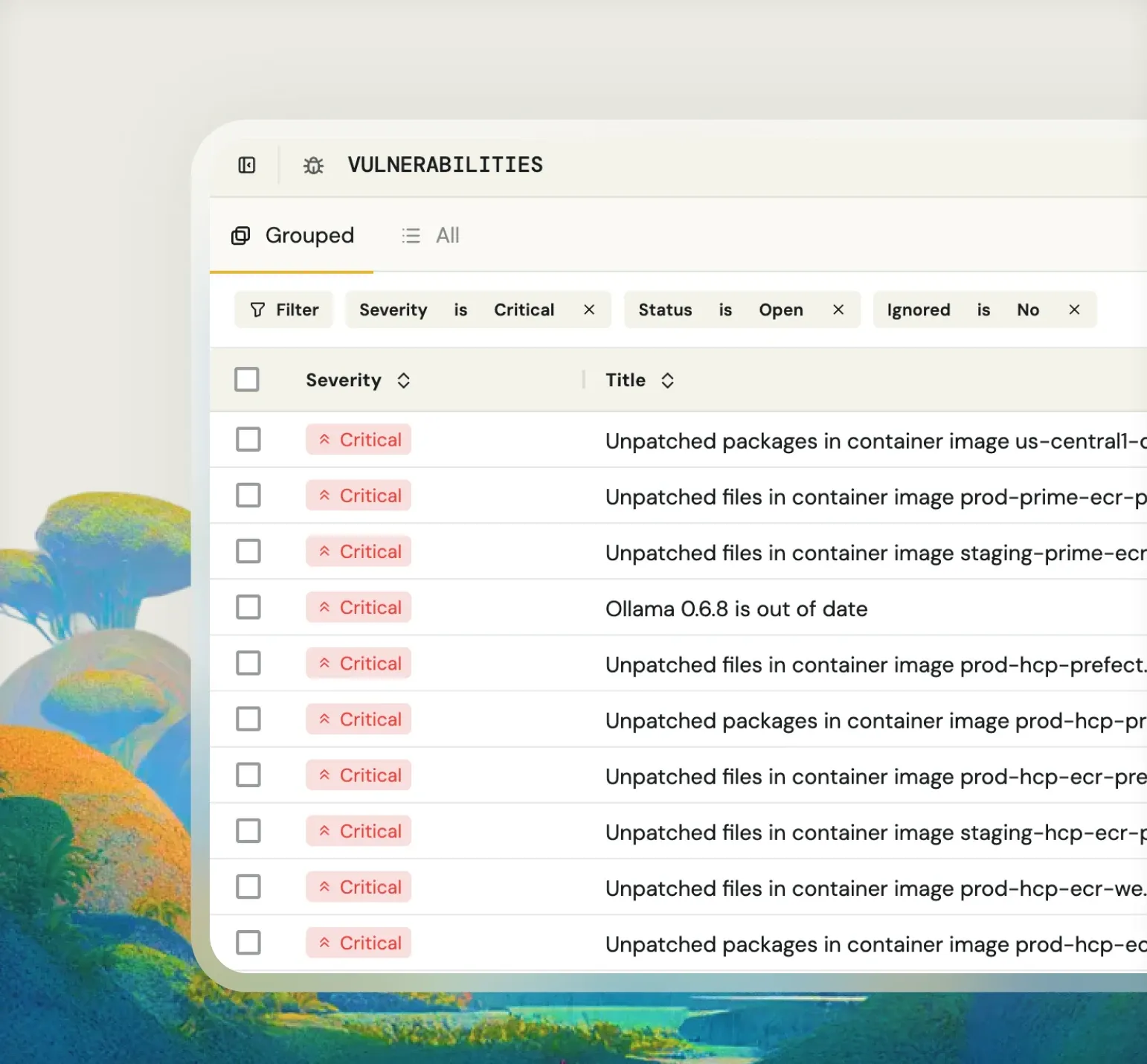
Fix vulnerabilities without juggling tools
Ditch the frankensteined stack of security tools, for a single place to find and fix vulnerabilities across your code, cloud, and infrastructure.
Why Fencer?
Built to cut security busywork
Connect your repos, cloud accounts, and domains and findings start flowing in immediately.
Context-aware scans find real vulnerabilities based on your architecture.
AI patches for code, automated remediation for cloud, and clear instructions for everything else.
Capabilities
Vulnerability management across code, cloud, and everything in between
Unified findings across every scan type
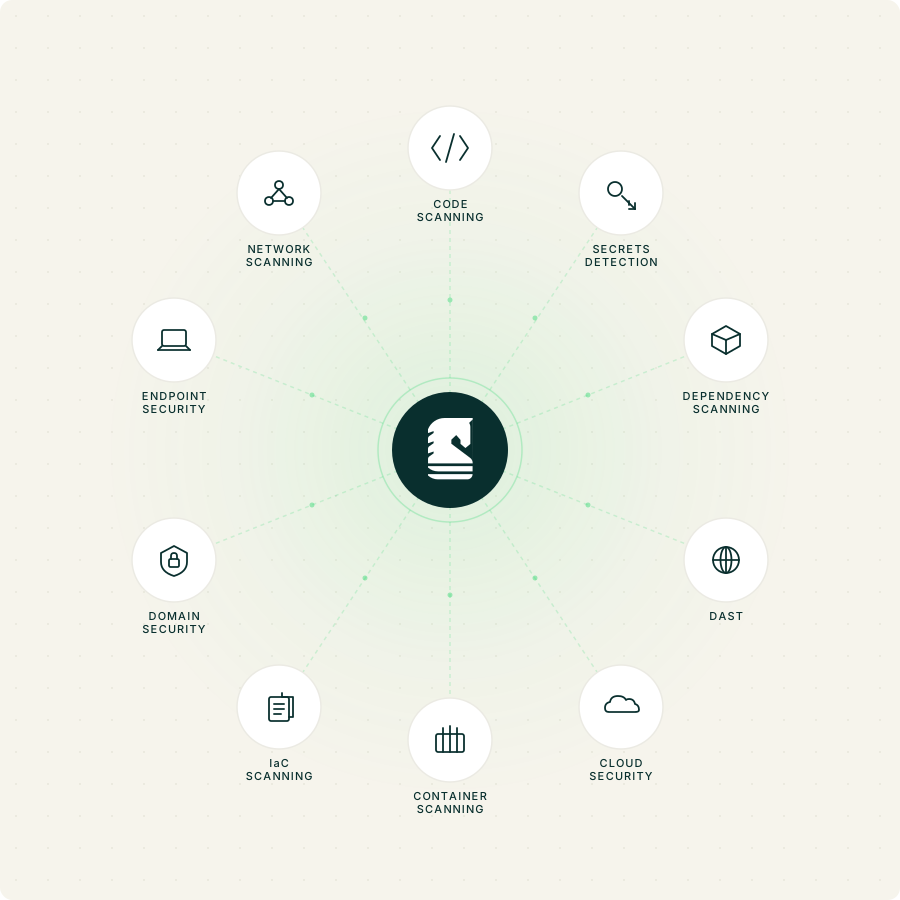
Every scanner in Fencer feeds into the same vulnerability pipeline. Code vulnerabilities, cloud misconfigurations, exposed secrets, container CVEs, domain security issues, and DAST findings all land in one view, deduplicated and normalized into consistent severity-rated records.
- Code scanning: SAST findings from pull requests and scheduled scans
- Secrets detection: Exposed credentials and API keys found in repos and hosting platforms
- Dependency scanning: CVEs and license risks in open-source packages
- DAST: Runtime vulnerabilities in your web applications and APIs
- Cloud security: Misconfigurations across AWS, GCP, Azure, and hosting platforms
- Container scanning: CVEs in registry images across AWS ECR, GCP, Azure, and Docker Hub
- IaC scanning: Misconfigurations in Terraform, CloudFormation, and Kubernetes templates
- Domain security: DNS, SSL, email authentication, and phishing domain findings
- Endpoint security: Device-level vulnerability findings from EDR integrations
- Network scanning: Vulnerabilities and exposed services across your external network
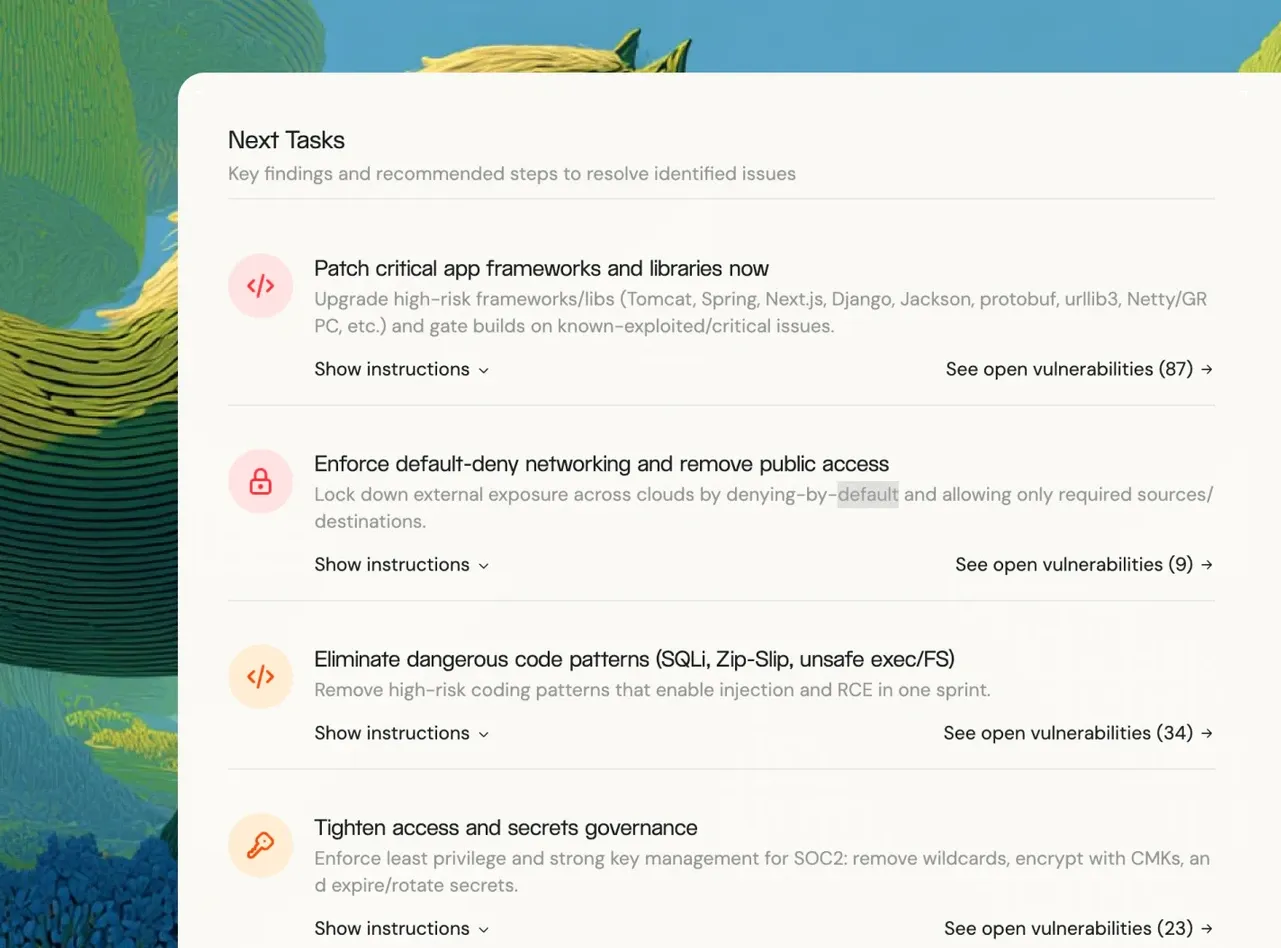
Always know what to fix next
Not every Critical finding needs your attention today. Fencer gives you an opinionated view of where to focus: severity-rated findings with production environments weighted first, so your team has a clear, prioritized security backlog rather than a wall of alerts.
- Severity ratings: Critical, High, Medium, and Low across all finding types
- Environment weighting: Production findings surface ahead of development and test environment results
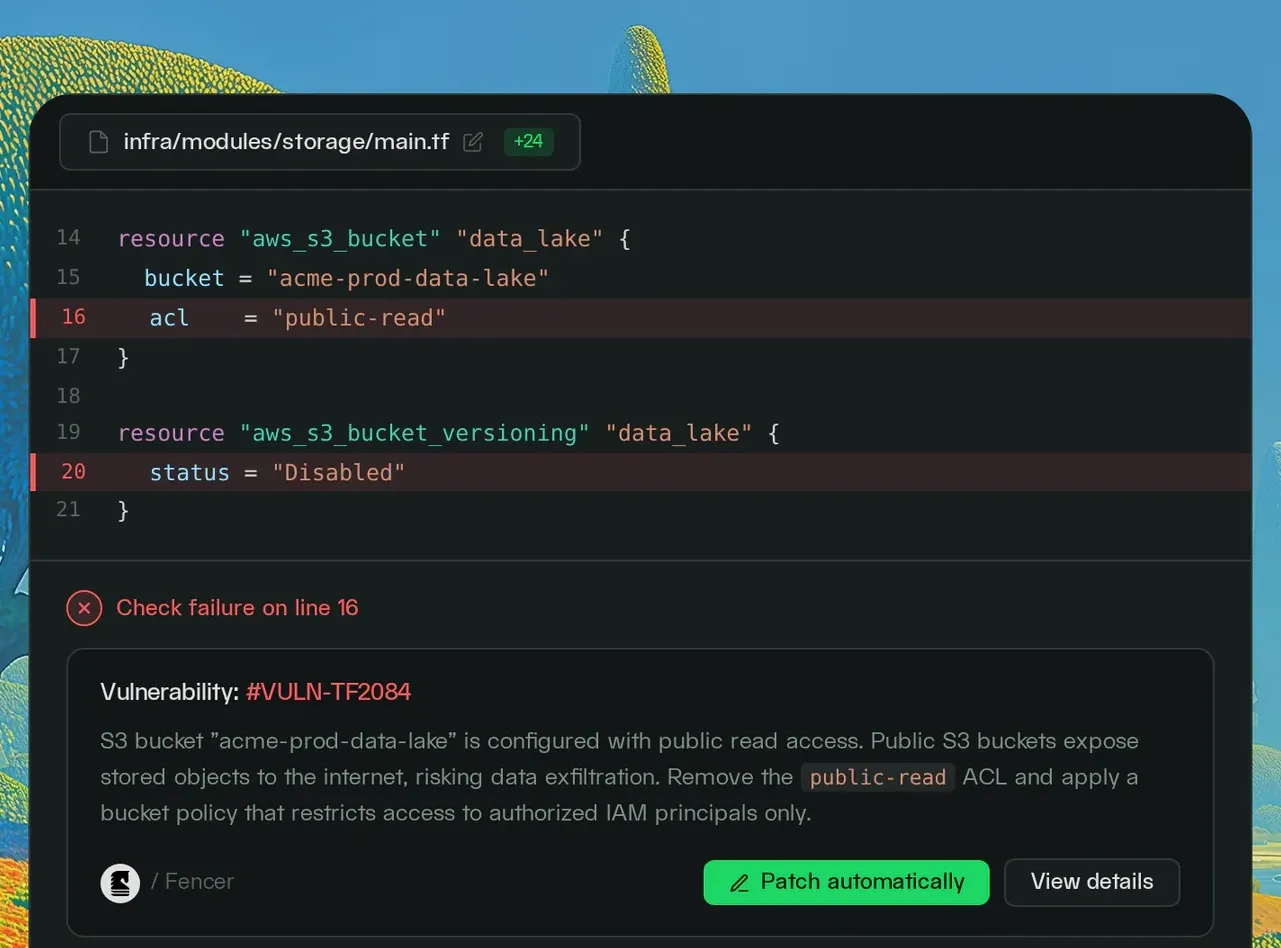
AI-assisted remediation across your stack
Fencer helps you go from finding to fixed — whether that means an AI agent generating a code fix and opening a pull request, automated remediation applied directly to a cloud misconfiguration, or detailed step-by-step instructions where automated fixes aren't available. Every finding comes with a clear path to resolution.
- AI fix agent for code: Generates a patch and opens a pull request in your repo for code vulnerabilities, dependency issues, and secrets. Full explanation included.
- Automated cloud remediation: Fencer applies fixes directly to low-risk cloud misconfigurations in your AWS, GCP, or Azure account when appropriate access is granted
- Detailed remediation guidance: For every finding where automation isn't available, Fencer provides specific step-by-step instructions so your team knows exactly what to do
- PR created in your repo: One click from finding to fix, in GitHub, GitLab, or Bitbucket
Scanner rules that cut through the noise
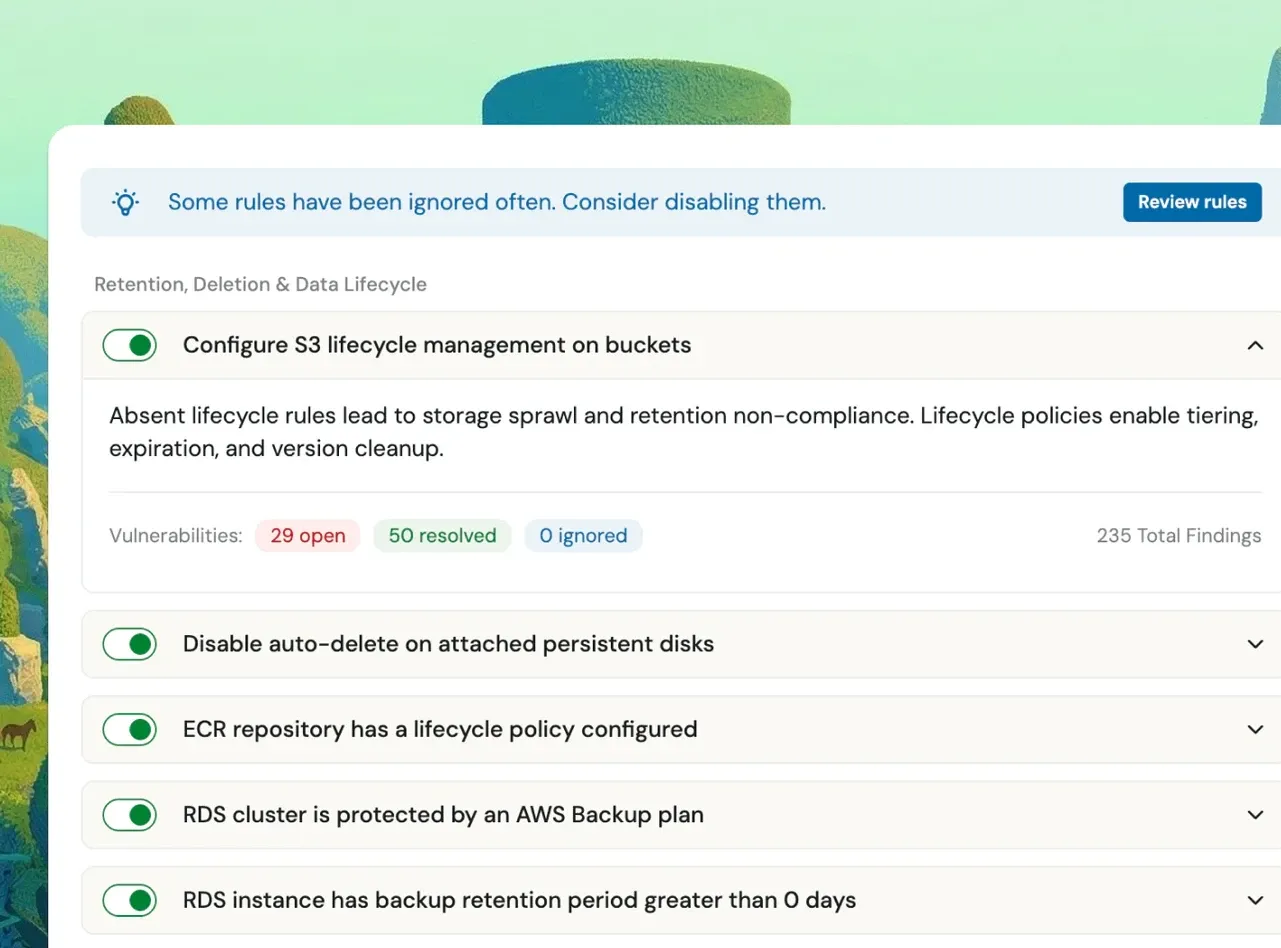
You control which checks run during your scans. Disable rules that don't apply to your environment, and Fencer will suggest rules to disable based on what you keep ignoring. Your queue reflects your stack, not a generic checklist.
- Rule disabling: Turn off checks that don't apply to your stack or environment
- AI-powered suggestions: Fencer detects patterns in ignored findings and proactively suggests rules to disable
What can you do with Fencer's unified vulnerability management?
Triage a weeks worth of findings in one sitting
Code scans, cloud scans, container scans — findings pile up fast. Fencer normalizes everything into one queue so you can triage across scan types without switching tools.
Know what's open and what's been fixed
Fencer tracks every finding from first seen to resolved, with scan history showing new, resolved, and ignored counts per scan. Always know where you stand.
Give auditors a documented remediation record
SOC 2 auditors want evidence of ongoing vulnerability management, not just a policy. Fencer's finding history, severity ratings, and resolution tracking give you that record automatically.
Assign security work like any other work
Assign findings to developers, create Linear or Jira issues with one click, and track resolution without chasing people. Security work in the same system as everything else.

“A lot of security products are built for a dedicated security team. Fencer takes a developer-first approach and meets you where you already are as a dev team, which makes it a much better fit for a startup like ours.”
— Ben Papillon
CTO & Co-founder, Schematic
Take Fencer for a spin
Start a free trial in minutes, or book a demo for a guided tour.