Schematic
 Customer Story

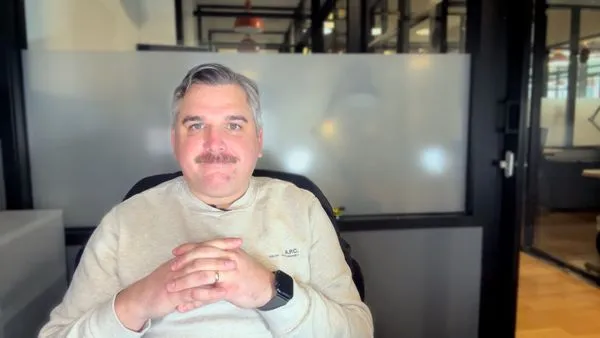
Ben Papillon

CTO & Co-founder

Schematic

The Challenge

As an early-stage startup building core infrastructure, Schematic needed to take security and compliance seriously from the beginning. But without a security team, that responsibility fell to engineering, alongside shipping product and supporting customers.

They ran into several challenges along the way:

  • Tool sprawl: To cover basic security and compliance requirements, the team adopted multiple tools in quick succession. Static analysis, DAST, vulnerability scanning, and compliance tracking all lived in separate systems, creating a fragmented stack with little shared context.
  • High operational toil: Security findings were often repetitive or low signal. Without a security operations team to triage issues, developers spent time sorting through noise and second-guessing priorities instead of fixing meaningful problems.
  • Compliance busywork: Preparing for SOC 2 introduced ongoing manual work. Evidence collection, documentation, and other audit prep pulled time away from core engineering efforts.
  • Overbuilt enterprise solutions: Many security tools assumed dedicated security staff and lots of time. Engineers were left clicking between dashboards and managing workflows that didn’t match how modern engineering teams actually work.


"We were starting to feel like there was a mismatch between the tooling that was available and where we were at as a business."

Ben Papillon

CTO & Co-founder

The Solution

Schematic adopted Fencer to consolidate security work into a single system designed for startup engineering teams.

  • Architecture-first context: Fencer maps Schematic’s architecture before surfacing findings, the context-aware approach reduces duplicate and irrelevant issues.
  • Developer-centric workflows: Security findings flow directly into the tools the team already uses, instead of requiring engineers to live in yet another dashboard.
  • Stack consolidation: Fencer replaced multiple point solutions by covering static analysis (SAST), dynamic application security testing (DAST), dependency and vulnerability scanning, DNS and external asset checks, and compliance evidence collection

"What I like about Fencer is that it takes an approach that I think a lot more companies want these days, which is doing security from the perspective of a developer rather than a more specialized security team."

Ben Papillon

CTO & Co-founder

The Results

With Fencer in place, Schematic strengthened their security posture while reducing the day-to-day burden on engineering.

  • Critical issues caught earlier: Fencer identified a critical vulnerability related to Amazon ECS usage, allowing the team to resolve it before it became customer-facing.
  • Smoother SOC 2 audits: The current audit cycle requires less manual effort, as all evidence is automatically captured and submitted to their GRC tool.
  • Elimination of “click-ops”: Engineers no longer bounce between disconnected tools and dashboards to resolve security issues.
  • Shared visibility across teams: Because security work flows through the standard issue tracker, leadership and product teams have a clearer view of security effort and risk.

"My team feels like our time is finally being used well in this category of work. Fencer is focused on surfacing the findings that matter, unlike other tools which were spewing off a bunch of garbage that we needed to keep up with."

Ben Papillon

CTO & Co-founder