New: Pressure test your SOC 2 report against buyer requirements
Free check
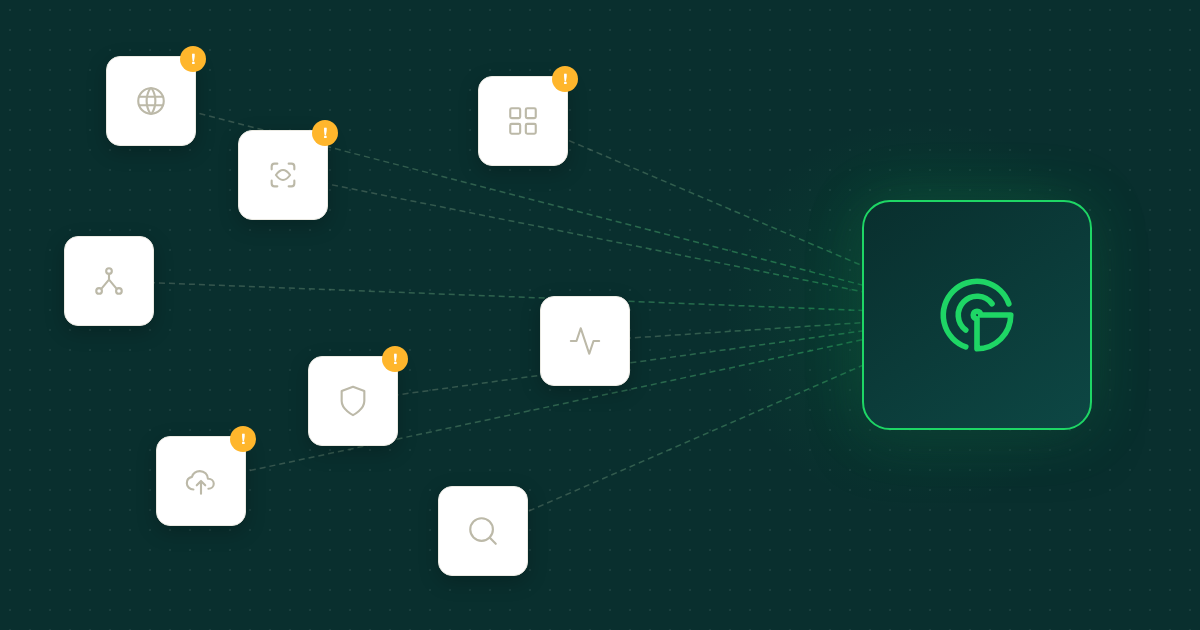
Most startups burn hours every week on security busywork that has nothing to do with reducing risk. Here are five common patterns and what to do about each.
Startups invest in security tooling for good reasons: to scan for vulnerabilities, to protect customer data, to meet the requirements that come with growth. The tools themselves aren't the problem. But the way they end up working together (or not) can quietly create hours of overhead that has little to do with improving your security posture.
Most of it is fixable. Here are five of the most common patterns, and what to do about each.
Many startups end up accumulating security scanners as needs arise: one for static analysis, another for dependencies, another for cloud infrastructure, and so on. Each addresses a real gap. But the stack becomes unwieldy fast if those scanners aren't sharing context with each other. According to Cisco's 2024 Cybersecurity Readiness Index, 67% of organizations have deployed ten or more point security solutions, and 80% say that having multiple point solutions slows down their ability to detect and respond to incidents. If you're a startup without dedicated security resources, the operational drag created by security point solutions is even more significant.
When each tool has its own dashboard, its own severity scale, and its own alert format, the person responsible for security becomes the human integration layer, manually reconciling outputs from systems that were never designed to work together. Instead of spending time improving security, they get stuck on security busywork.
How to solve: Consolidate onto a single platform (like Fencer!) that covers code, dependencies, infrastructure, and cloud configuration in one place. The time savings compound every week because you're eliminating the reconciliation work entirely.
Security questionnaires show up regularly, and the questions are mostly the same each time. But without a single source of truth for your security posture, every questionnaire risks becoming a research project. Answers live in different Google Docs, Notion files, Slack threads, and people's heads. Meanwhile, your infrastructure is evolving rapidly, so old answers can go stale. The result is hours of rework on questions you've already answered before.
How to solve: Keep your security posture continuously monitored and centralized so questionnaire answers become a lookup, not a scavenger hunt. "Do you scan for vulnerabilities?" Yes, here's the live evidence. "How do you manage access controls?" Here's the current state, pulled directly from the platform. The difference between "give me two days" and "give me twenty minutes" is whether your security data lives in one place or is scattered across a dozen tools and documents.
Audit season arrives. Your auditor sends a list of evidence requests. And then someone spends the next two weeks taking screenshots.
Screenshot of your AWS security group configuration. Screenshot of your access review log. Screenshot of your vulnerability scan results. Export a CSV here, export a PDF there, paste it into a shared folder with a naming convention someone made up on the spot last year. According to Hyperproof's research on evidence management, half of security and compliance professionals spend at least 50% of their time on low-level administrative tasks like locating evidence for audits.
This is not security work. This is clerical work that happens to involve security tools. All of this evidence already exists in your systems. The only reason it takes weeks is because your tools don't capture and organize it as it's generated.
What to do instead: Use a platform that automatically collects evidence as scans run and controls are enforced. Audit prep goes from a multi-week scramble to a quick review. You spend your time confirming that everything looks right, not hunting for proof that it happened.
You blocked out an hour for a security review. The right people are in the room. And then everyone stares at a dashboard full of alerts, most of which have been there since last month. Nobody knows which ones matter most. Nobody knows who owns what. The meeting ends with "let's prioritize these next sprint," which is exactly what you said last time.
The root of the problem is that most security scanners produce a flat list of findings with no prioritization, no ownership assignment, and no context about what changed since the last review. When the tooling doesn't distinguish between a new critical finding and one that's been sitting there for three months, the meeting becomes about triage instead of decisions. And when every meeting is spent triaging, nothing gets resolved and the next meeting looks exactly the same.
What to do instead: Your security platform should surface a short, prioritized list before the meeting starts: what's new since last time, what's critical, and who's responsible for each item. A good security review should take fifteen minutes and end with specific action items. If it takes an hour and ends with "we'll get to it," the problem isn't the meeting cadence. It's the tooling feeding the meeting.
Your dependency scanner flags a critical vulnerability in a package three layers deep. Your code scanner flags what looks like a related issue but calls it something different, gives it a different severity, and points to a different file. Are these the same thing? Are they different? Which severity is right?
You spend thirty minutes digging through CVE databases, cross-referencing version numbers, and reading GitHub issues before you can even decide whether this is one problem or two. Multiply that by every overlapping finding across every tool you run, and you've got a recurring time tax that nobody tracks but everyone feels.
This is the inevitable result of running multiple disconnected scanners. Each tool has its own vulnerability database, its own severity model, and its own way of describing findings. When they overlap (and they will), someone has to reconcile the differences manually.
What to do instead: Run your scans through a single engine. One platform, one vulnerability database, one severity model. Deduplication happens automatically because the findings are generated from the same source. The thirty-minute investigation becomes a non-issue.
All five of these come back to the same root cause: too many disconnected tools creating work that feels productive but isn't. You're not improving your security posture when you're copying screenshots into a shared drive. You're not reducing risk when you're cross-referencing two scanners that disagree. You're maintaining your tooling, not your security.
The fix isn't "try harder" or "hire someone." It's consolidating onto a platform that was designed to handle all of this from one place. Fencer covers code scanning, dependency analysis, infrastructure security, and cloud configuration in a single platform, with evidence collection and audit readiness built in. If any of these five patterns sound familiar, it's worth a look.