New: Pressure test your SOC 2 report against buyer requirements
Free check
SOC 2 is table stakes for enterprise deals. See what buyers ask in security reviews beyond the badge, and how to spot procurement gaps early.
You did everything right: you picked a framework, ran the audit, and earned a clean SOC 2 Type 2. The badge went on the website, and you expected it to clear the path into the enterprise.
Then your first big deal reached security review, and a 200-question security questionnaire landed in your inbox. Most of the questions weren't answered by your report. Some weren't in your SOC 2 scope at all. The deal didn't die, but it stalled, and the security review became the longest stage in the sales cycle.
If that sounds familiar, you've run into the gap nobody warns you about: the distance between passing a compliance audit and being ready for enterprise procurement.
SOC 2 is now the bare minimum for enterprise buyers; it opens the door but won't close deals. Their security teams have learned to trust the badge less and the evidence more, because plenty of companies get certified without doing the deeper work the report implies.
So the report gets you taken seriously, but the questionnaire is where the deal moves forward or stalls.
A SOC 2 audit confirms you met a set of controls during a window of time. An enterprise security review asks something different: can we trust you with our data, our customers, and our risk?
Those questions get specific in ways a SOC 2 report often doesn't address:
A clean report with zero exceptions can still come back with a dozen of these flagged. Enterprise buyers are measuring you against their security bar, not the standard's.
Two things are raising the bar at once. Enterprise buyers are getting attacked more, so their expectations of vendors keep climbing.
A new generation of AI-driven third-party risk tools now grades vendor questionnaires automatically, many of which won't let you opt out of a question by pointing at a SOC 2 report. The "see our SOC 2" shortcut is closing.
Meanwhile, the cost lands on the smallest teams. A single enterprise security review can delay a deal for months via back and forth evidence gathering and review. Multiply that across your pipeline and security is now a revenue problem.
The teams that get through procurement smoothly treat SOC 2 as a starting point rather than the finish line.
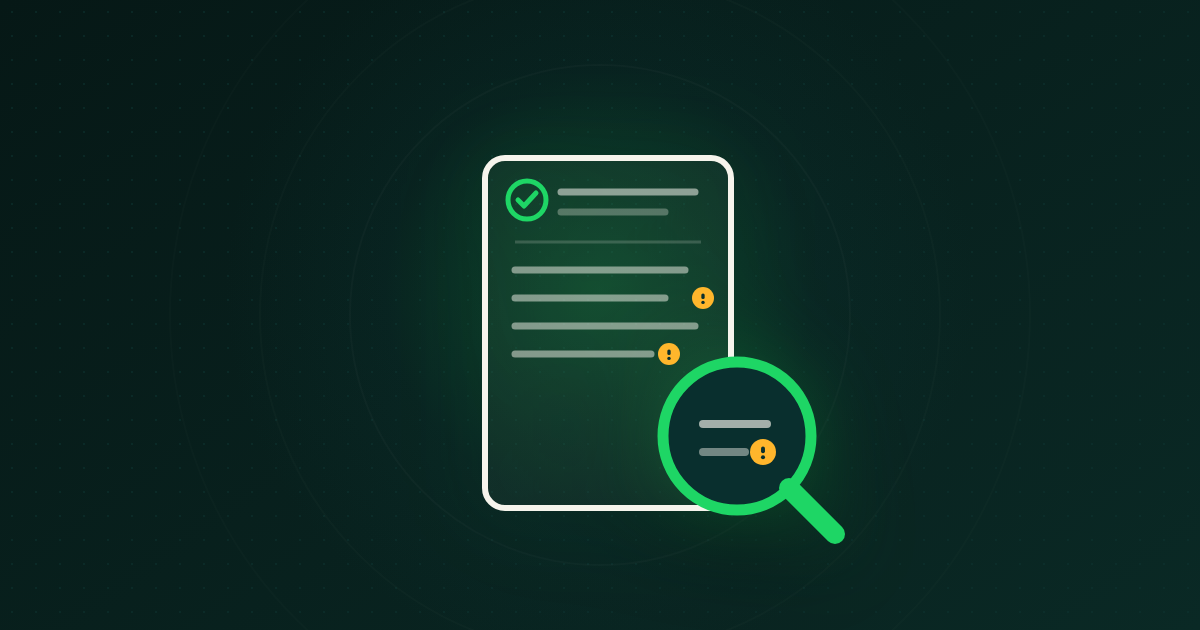
The question worth asking is this: if the security team at the account you're chasing read your report today, what would they flag? Answer that before you send the report, and the security review stops being the stage where deals go to wait.
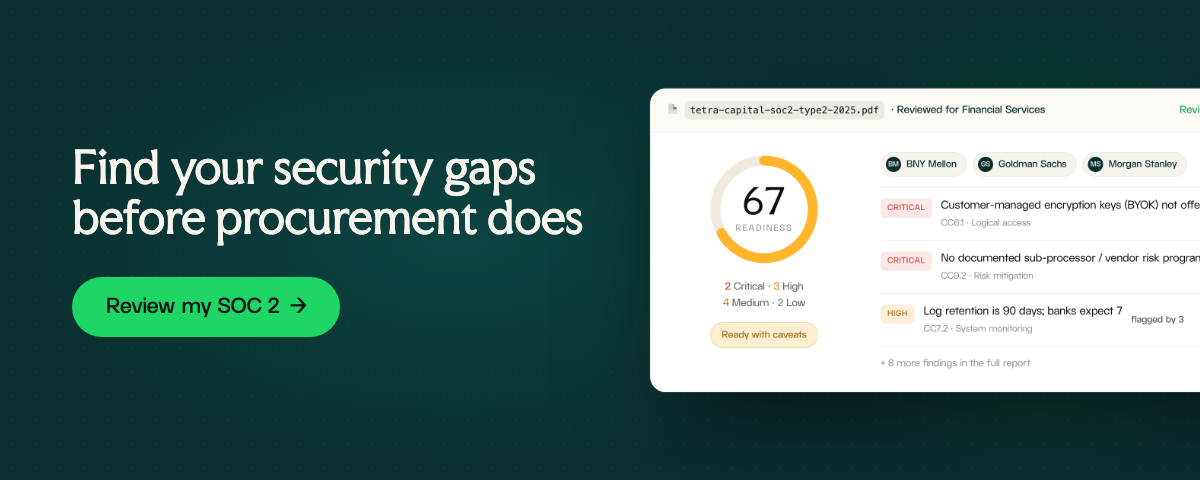
That's exactly why we built the Procurement Readiness Check. It's a free tool that reads your SOC 2 report the way an enterprise security reviewer would, calibrated to the specific buyers you're selling into, and shows you where you'd fall short while you still have time to fix it. It takes about 90 seconds, and your report is encrypted, never used for training, and deleted after the review.
Run the Procurement Readiness Check →