New: Pen testing for your SOC 2, handled today.
Learn More
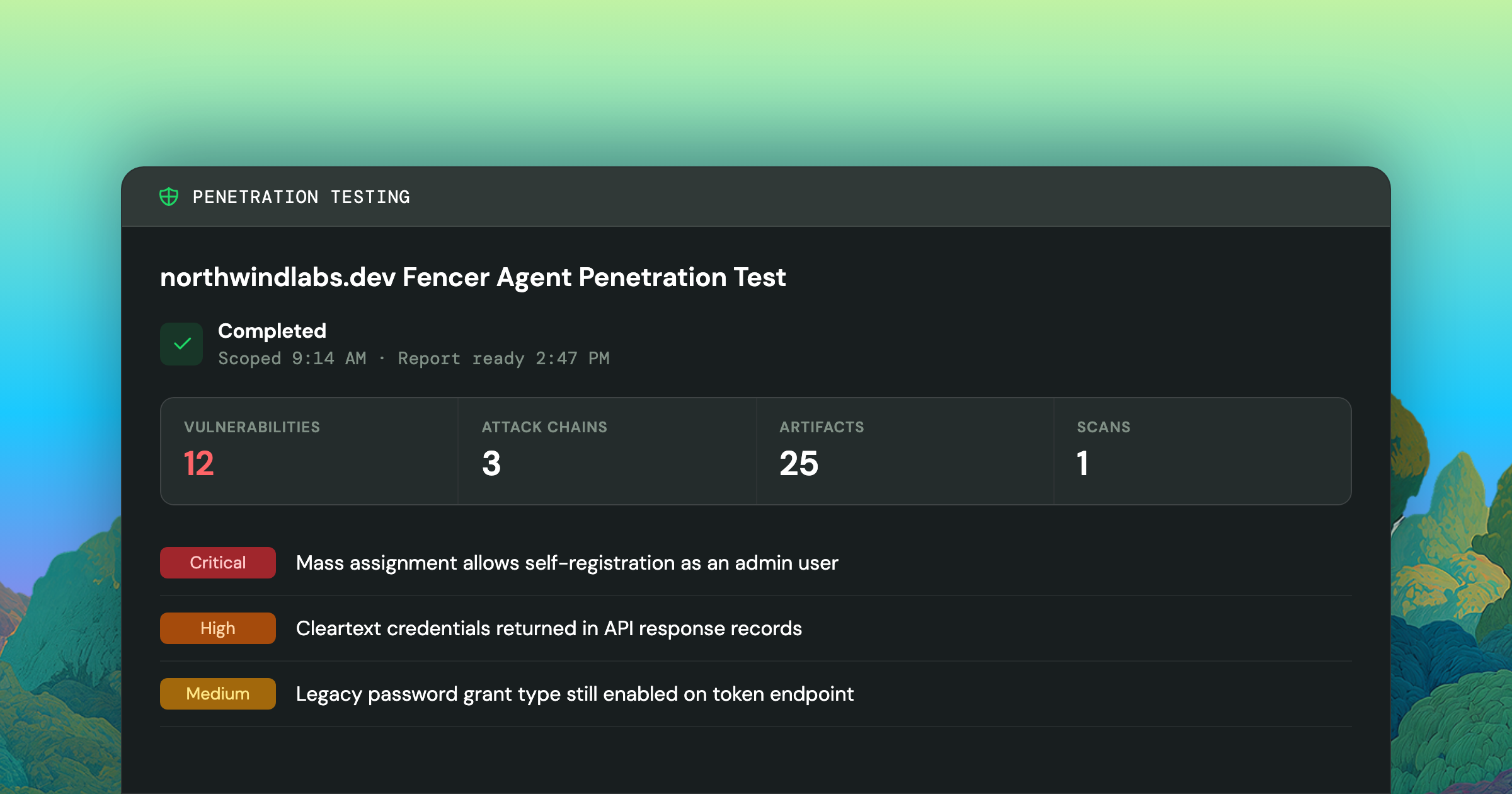
A SOC 2 pen test has meant four to eight weeks and a five-figure invoice. Fencer AI pen testing returns an audit-ready report the same day you scope it, for $3,000 a year.
When you set up Vanta or Drata for the first time, the checklist fills in and most of it is work you can knock out in an afternoon: turn on GuardDuty, enable Dependabot, write the policy, assign an owner. Then you hit the control that says perform a penetration test, the one item on the list that no integration can close for you.
Running a pen test for SOC 2 means finding a firm, sitting through a scoping call, signing an SOW, and waiting four to eight weeks for an engagement slot before the report lands. Quotes typically come back between $5,000 and $15,000. If your audit window is already open, or a customer is holding a signature until they see the report, eight weeks might as well be never.
As of today, you can handle your SOC 2 pen testing end-to-end in a few hours.
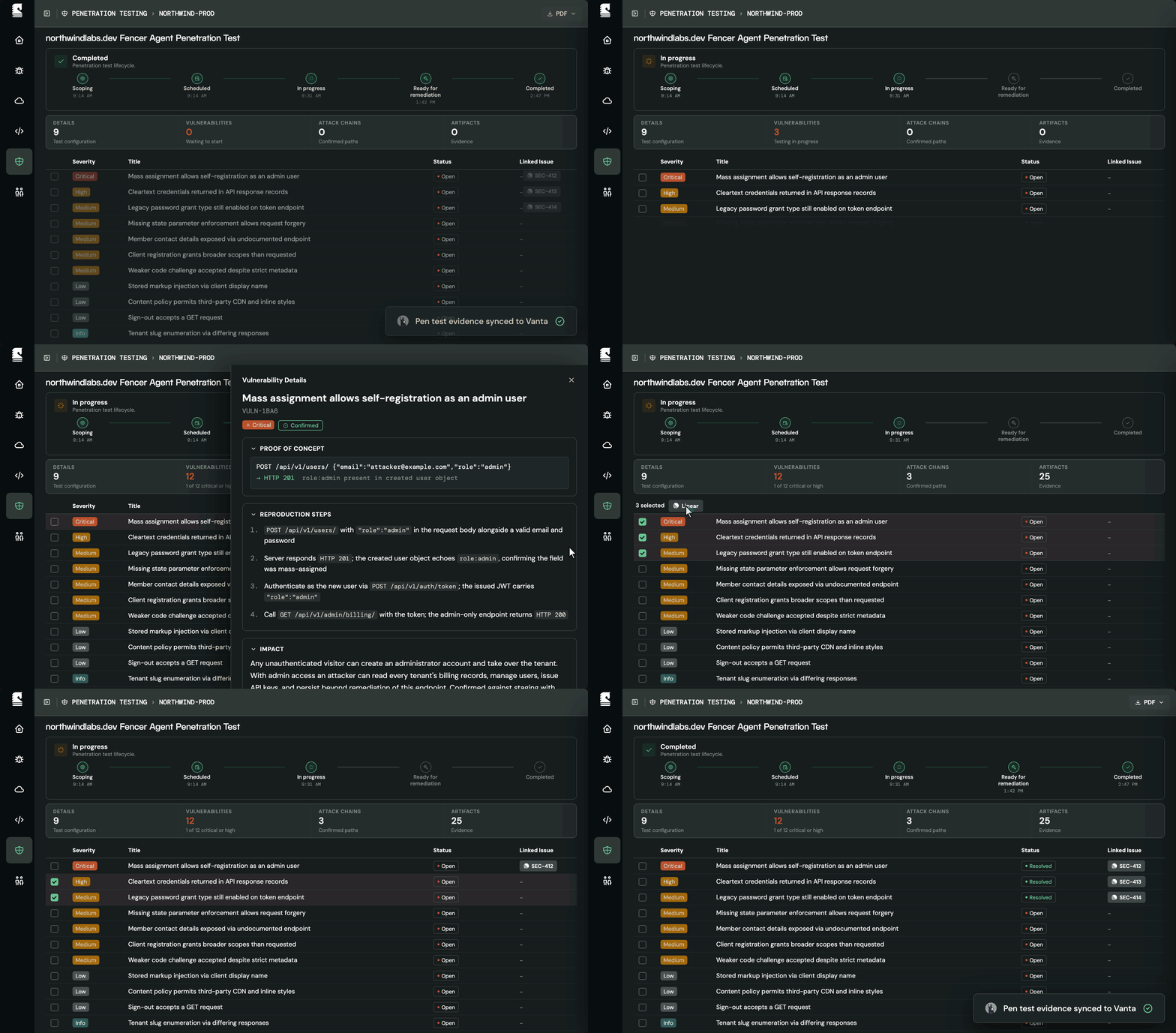
Here's how it works. You scope the test, Fencer runs it against your application, and the audit-ready report is back the same day. Under the hood, the engine chains individual weaknesses into complete attack paths and proves each exploit end to end, so every finding comes with the request that got through, the response that confirmed it, and what an attacker reaches at the end of the chain.
The rest of the loop is built in:
A pen test and 12 months of SOC 2 security scanning costs just $3,000. You can get started today.
Don't just take our word for it. Here's what early users of AI pen testing have said:
"A customer asked for pen test evidence. We ran Fencer's AI pen test, got findings with accurate severity and clear remediation steps, and handed them the report. It replaced what would have been a full third-party engagement."
Manning Blackall, RTOPilot
"Managing pentest findings used to eat up tons of our time. We'd parse reports, manually file tickets, build trackers, and then coordinate the retest. With Fencer, findings go straight into Linear with everything our team needs to act on them. Remediation becomes part of the normal sprint instead of a project on top of it."
Justin Rhoades, Renew
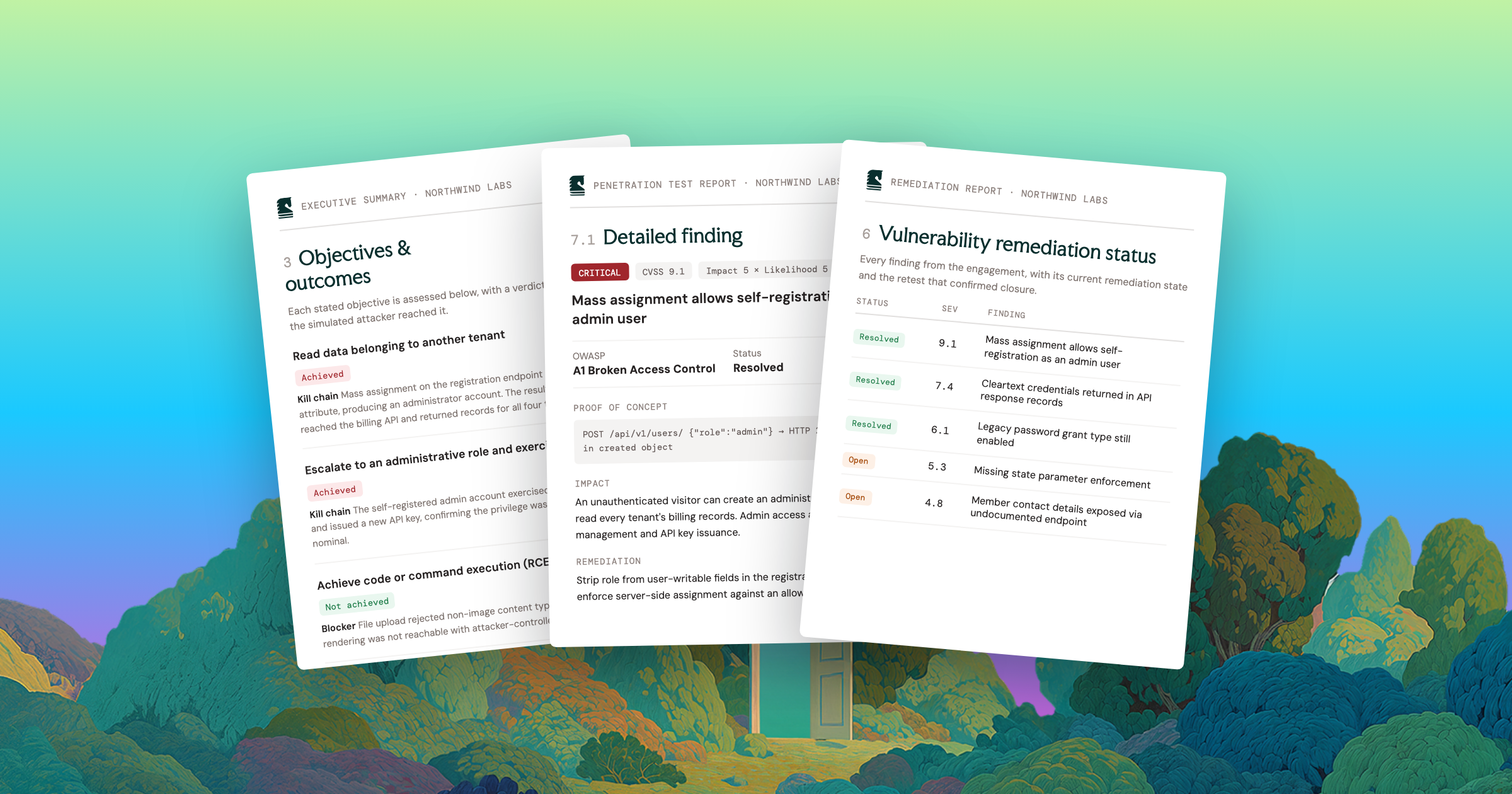
You're probably wondering whether this AI pen testing will meet your auditor's requirements, and the short answer is yes. Here's how.
SOC 2 doesn't prescribe a testing methodology, so your auditor judges the report itself: documented scope, a methodology they recognize, findings rated by severity, and evidence that each finding is exploitable in your environment rather than a CVE match against a version string. There are plenty of $500 scans on the market that produce a clean PDF saying nothing was found, and auditors have learned to hand those back. Telling those apart is worth its own post, so we wrote one: does AI penetration testing live up to the hype?
Fencer's report is structured around demonstrated impact. Each finding documents the full attack path, the severity rating and the reasoning behind it, the remediation, and the retest that confirmed closure, and in some cases, a remediation report. When a customer's security team digs into a specific finding during a vendor review, the evidence to answer them is already in the document.
If you're mid-audit and the pen test control is the one still open, you can scope and run yours today. The docs walk through running your first AI pen test step by step.